Beyond the Algorithm: How to Build a Successful AI-Driven Enterprise
Let’s start this first edition with a topic that will soon become unavoidable for most companies around the world, even those far outside of tech.
What does effective AI adoption inside organizations really look like?
Most companies still think of AI adoption as a technical upgrade: hire engineers, train a model, plug it in, and move on.
However, that rarely works.
The hard part is cultural and operational. Effective adoption changes how people work, how leaders set expectations, and how the entire business thinks and operates.
A few months ago, Shopify CEO Tobias Lütke laid this out in a viral memo. He told employees that AI use is now a “baseline expectation” at the company. The memo was blunt, but it captured where the shift is going.
AI changes how people work and how leaders set expectations. I wrote an essay with the team at Turing on this exact point. Here’s the short version of what I argued.
AI adoption succeeds when it changes behavior, not just software.
That means:
Make it clear for teams
People need to understand how AI supports their job, not replaces it. Adoption rises when employees feel in control.
Leverage cross-domain fluency
AI fails without human oversight. Medical, legal, and industrial cases demand experts who understand both the domain and the data.
Don’t build everything in-house
For most companies, it is better to partner with vendors or academic labs than to waste cycles reinventing infrastructure.
Read the full essay here: Beyond the Algorithm: How to Build a Successful AI-Driven Enterprise.
When I shared this post on LinkedIn, I ran a quick poll.
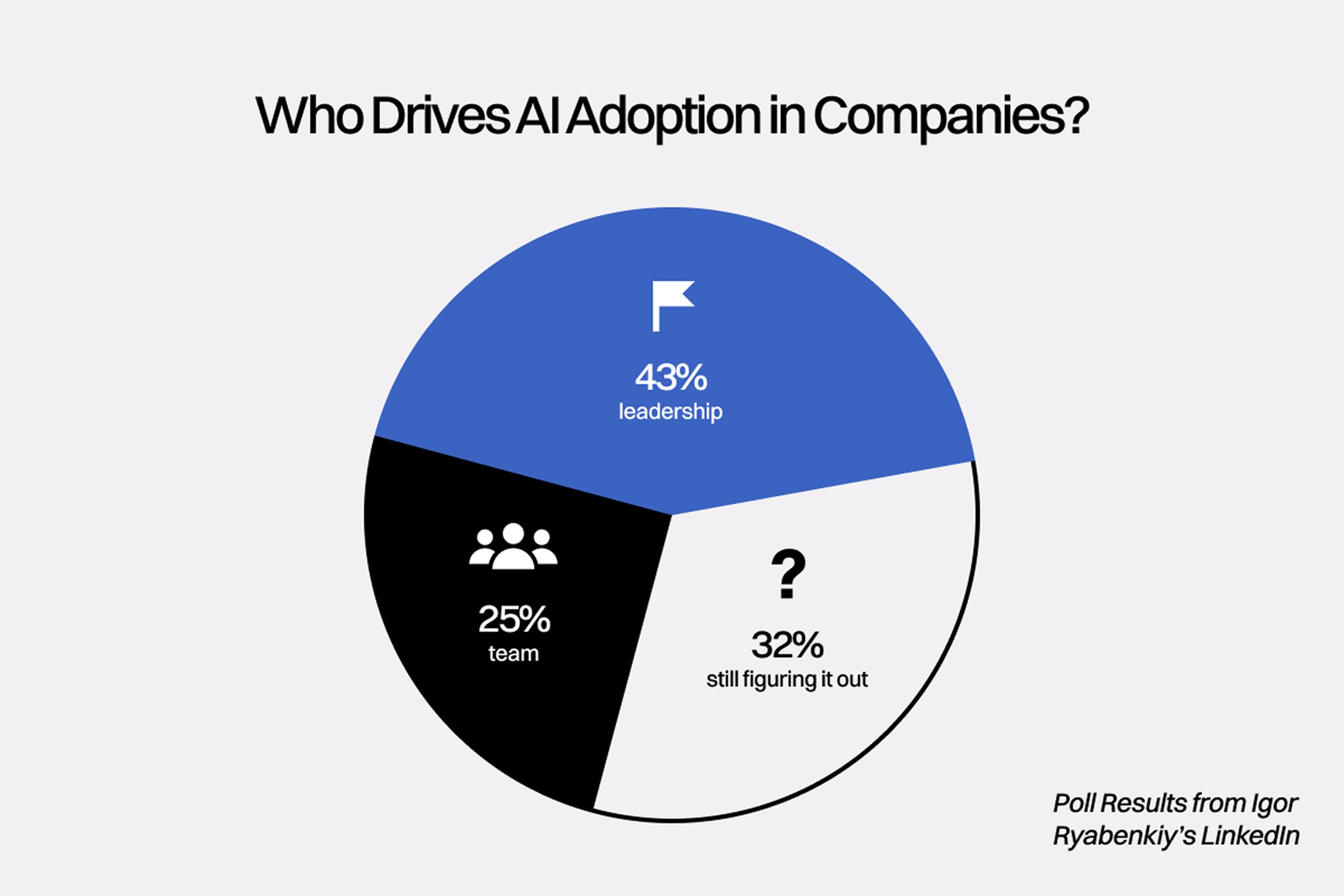
The results tell me two things:
First, most companies still see AI as a top-down initiative.
Second, a third of leaders don’t yet have a clear strategy.
For these companies, the shift hasn’t happened yet — but it will.
That is why I see real leverage here both for startups building domain-specific AI solutions and for organizations and experts who help companies adopt AI effectively.
Roll-Up Risks, New GTM Playbook, and Other Trends
Roll-Up Strategies in VC
A new trend is emerging: VC firms acquiring multiple early-stage tech startups in the same vertical, aiming to roll them into integrated platforms.
For large firms with plenty of capital and strong operating teams, this strategy probably makes sense. It is a hybrid between growth-stage VC and PE, and it could be a way to create value faster.
However, I see a big risk for smaller VC firms.
Many of them simply do not have the resources or structure necessary to handle these integrations. What’s more, these roll-up deals are often financed through a mix of equity and debt. That adds another layer of complexity and risk to a strategy that already demands operational excellence.
Instead of creating value, smaller firms may end up wasting capital trying to piece everything together.
Even worse, roll-ups can distract from the real goal of early-stage VC: supporting focused, mission-driven founders and helping them scale, instead of forcing synergy after the fact.
Roll-ups are not a shortcut to returns. They are an entirely different game, and one that most VC firms are not set up to play.
Go-to-Market in the AI Age
AI apps are everywhere, but the question is how to grow without burning millions on ads.
In 2021, a decent product with SEO and some paid acquisition might have been enough. In 2025, with dozens of AI startups launching daily in every niche, the noise level is overwhelming.
SEO is broken, users are flooded, and the playbook has shifted.
Yet some teams have cracked the code.
What I see working now:
Content-first growth
Short videos, viral demos, and “aha” moments posted on TikTok, X, and LinkedIn.
Shareability built into the product
Think of Perplexity, HeyGen, and Gamma — tools that make it easy and rewarding to share results.
Laser-focused positioning
Micro-niches like “AI copilot for recruiters hiring in Eastern Europe” or “AI summarizer for legal due diligence.”
Community
B2B growth is often driven by trust and community, not ads. A few early champions matter more than 1,000 cold leads.
Vertical AI vs. Generalists
Tropic, a platform that helps companies manage spend, vendors, and procurement, recently analyzed $14B in software spend across SMB, Growth, and Mid-Market segments.
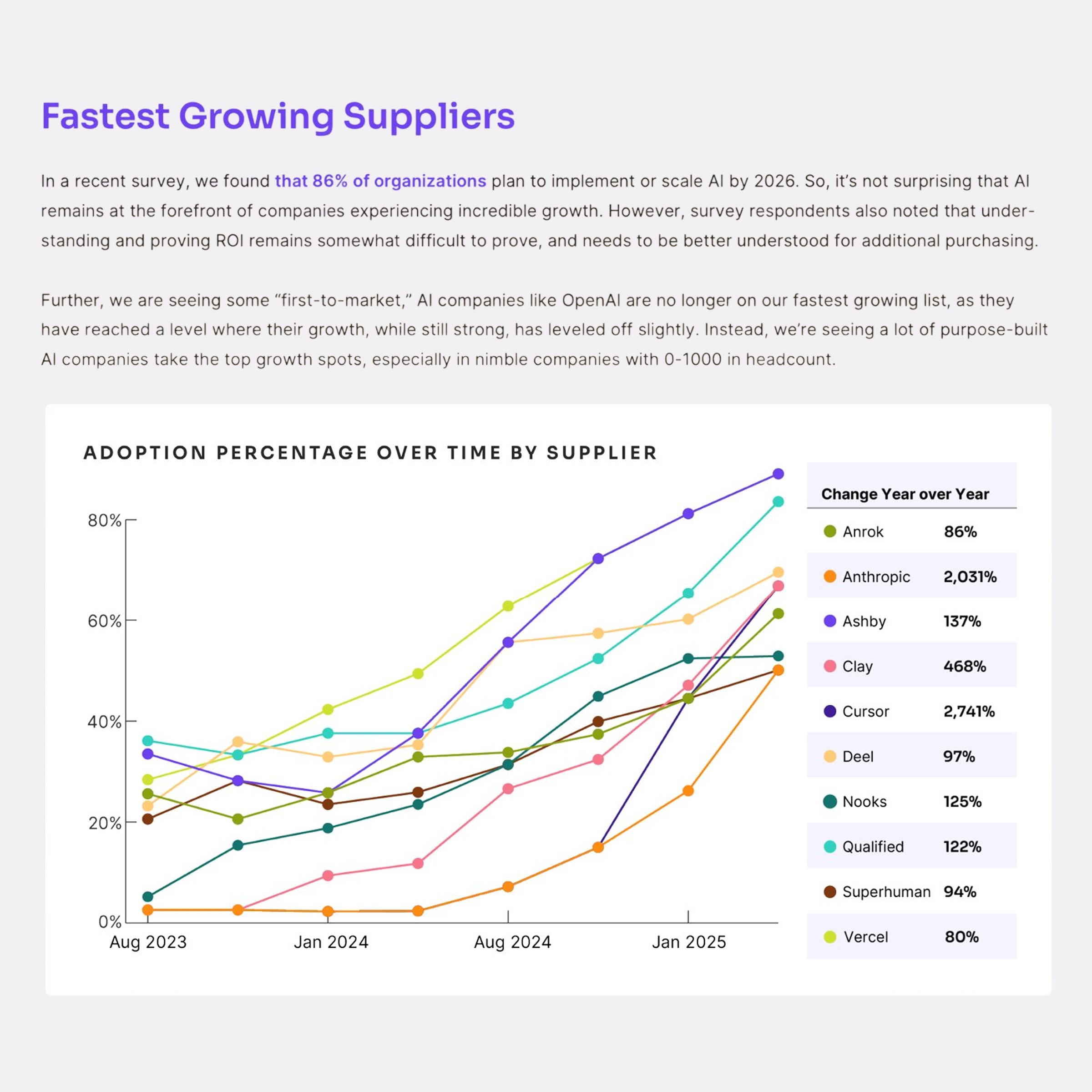
One clear signal emerged: vertical, purpose-built AI tools are growing faster than generalist platforms and early first-to-market players.
OpenAI’s explosive adoption has naturally leveled off, while focused newcomers are now topping the growth charts.
This is why I believe the strongest opportunities lie in startups with deep vertical insight and teams laser-focused on solving specific workflows with visible ROI.
That said, many of these startups still have to prove their defensibility. Some could get outrun by horizontal players overnight.
That is where the hard work begins.
Founders need to build real moats: deep user understanding, unique data, and tight feedback loops.
Coming Soon: New Book by Igor Ryabenkiy
My second book, exploring the discipline and mindset behind successful founders and lessons learned the hard way, is set to go live soon.

Some of you may already be subscribed to book updates. Thank you for that — you’ll continue to get early news through that channel.
For everyone else: if you’d like to be the first to know when Focus goes live, you can subscribe here.